

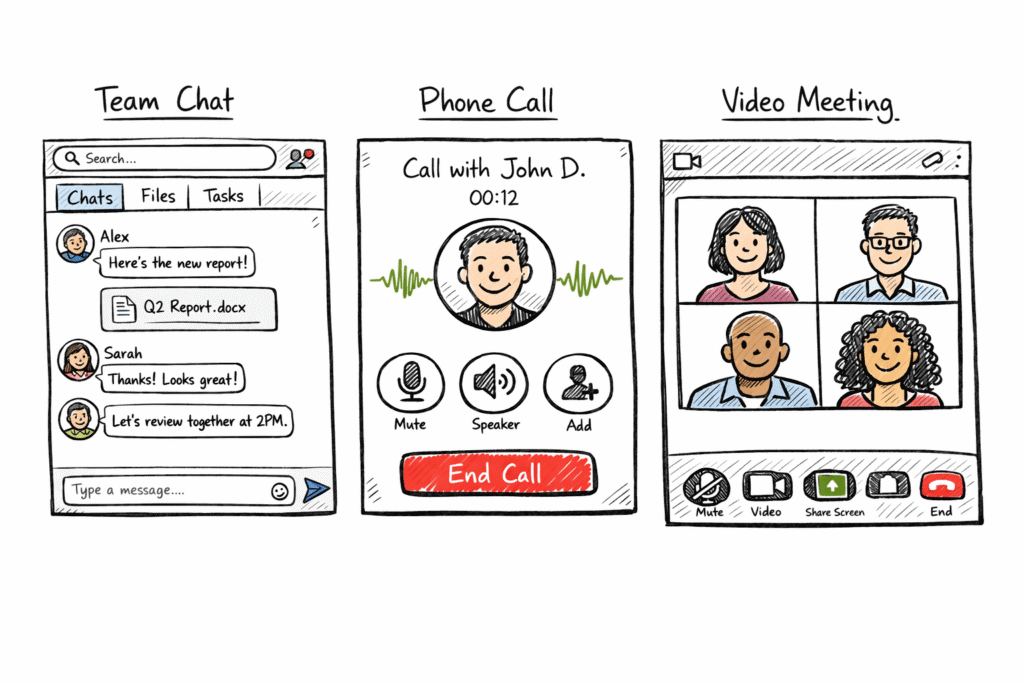
Cloud Communications as the Modern Communications Hub For years, business …

Top AI Automation Use-Cases Every Business Should Know Our earlier …

Unlocking Cost Savings for SMBs with Cloud Communications Do you …

AI in Action: AI Receptionists Transforming the First Impression of …

Blog: Is AI Fulfilling Its Promise in the Contact Center? …

The healthcare industry continues to evolve rapidly, driven by patient …

AI in Action – Top AI Use-Cases in Cloud Communications …
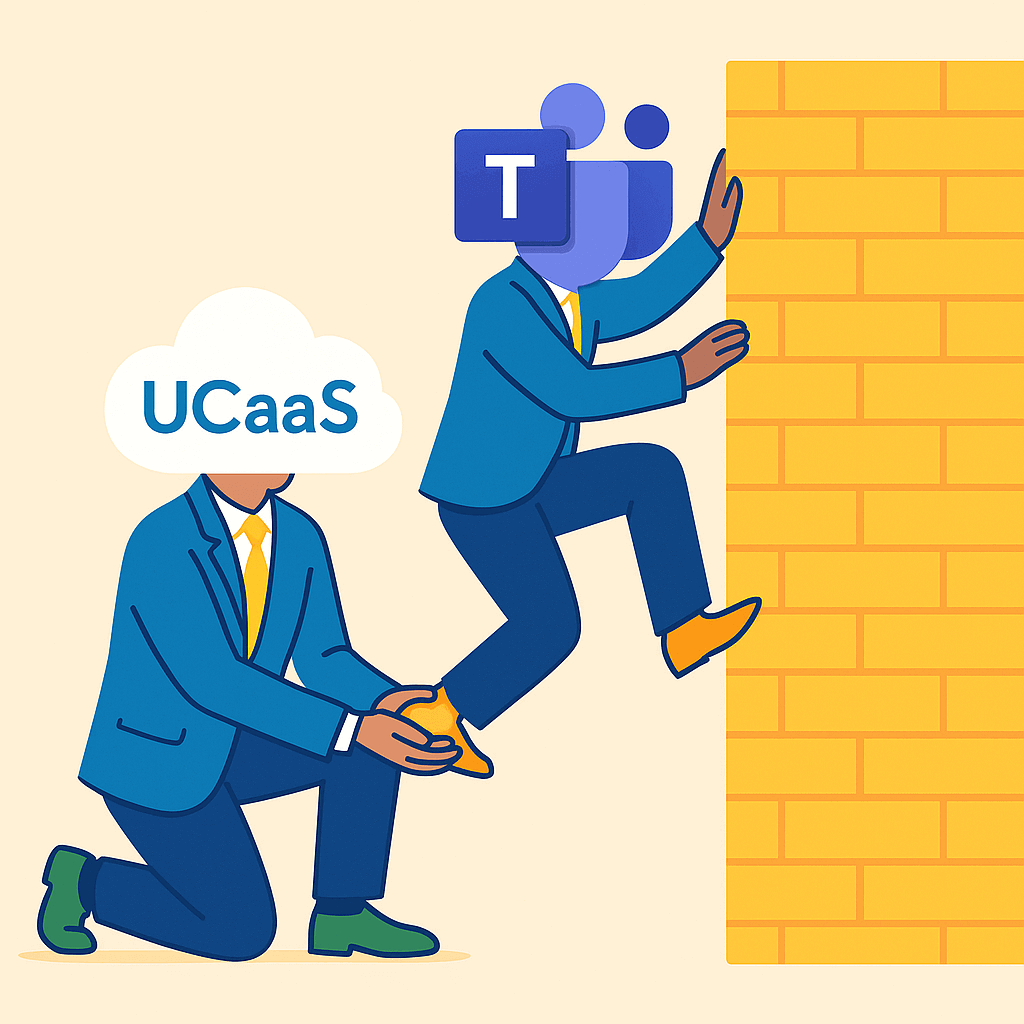
What is the Best Way to Add Phone to Microsoft …

Blog: AI in Action – Agent Soft Skills Contact centers …

Blog: Stop the Premise Insanity The numbers don’t lie: Multiple …

Blog: Unlocking the Future of Communication: AI in UCaaS and …

Blog: The Financial Value of Cloud Communications Communication isn’t just …

CallTower acquires Momentum Telecom voice and collaboration business
CallTower has acquired Momentum Telecom’s cloud voice and collaboration business, adding more than 3,500 customers and 250 employees and bringing CallTower’s customer base to more than 8,500 organizations. The deal includes Momentum’s voice and collaboration technology, customer relationships and associated employees, along with four senior Momentum executives joining the CallTower leadership team. CallTower says the acquisition will increase its scale and expertise across UC, CX and AI, while giving it greater resources to invest in products, technology and customer services.
This is not an acquisition of Momentum Telecom as a whole. Momentum will remain an independent company focused on its global network connectivity, security and managed network services, including SD-WAN and SASE. CallTower gains a much larger installed base and deeper capabilities in voice and collaboration, while partners can continue to bring CallTower into customer accounts as the managed communications layer while other providers handle connectivity and related infrastructure. The transaction therefore gives CallTower a substantially larger platform for expanding its channel business and pursuing additional growth. Learn more at Comms Business.

Key Takeaways from Gartner’s 2026 UCaaS Magic Quadrant
The 2026 Gartner Magic Quadrant for Unified Communications as a Service (UCaaS) reflects stability at the top of the market, with Cisco, Microsoft, RingCentral, and Zoom retaining their positions as Leaders.
Gartner highlights that AI innovation has become the primary competitive differentiator, with vendors increasingly embedding generative AI into calling, meetings, messaging, and workflow automation. While the Leaders continue to excel in both execution and vision, the overall field has narrowed, reflecting increasing consolidation and higher expectations for AI capabilities, global reach, platform reliability, and enterprise integration.
One of the biggest developments in this year's report is the reduction in the number of evaluated vendors, with Google and Sangoma removed. The remaining vendors include 8x8, GoTo and Dialpad as Visionaries, along with Vonage and Wildex as Niche Players. This illustrates the growing divide between providers with broad, AI-driven enterprise platforms and those serving more specialized markets. The report suggests that organizations evaluating UCaaS solutions should look beyond traditional telephony and collaboration features, placing greater emphasis on AI functionality, ecosystem integrations, security, and the ability to support evolving hybrid work and customer engagement strategies.
To be included in the Gartner Magic Quadrant for UCaaS, vendors must meet minimum thresholds for recurring revenue, deployed users (seat count), global market presence, and proven support for enterprise communications use cases. To learn more, visit UC Today.

Avaya Names New CEO
Avaya named their third CEO transition in roughly four years, by appointing Jeff Clarke as its new Chief Executive Officer. Clarke succeeds Patrick Dennis, who will transition to the role of Executive Chair. Clarke brings more than 30 years of enterprise software leadership experience, most recently serving as CEO of Insurity, and previously leading companies including Doxim and Travelport while holding senior executive roles at CA Technologies, Hewlett-Packard, and Compaq.
The leadership change comes as Avaya continues focus on it's customer experience strategy following the launches of the Avaya Infinity platform and Avaya Nexus under Dennis' leadership. The board emphasized Clarke's track record of driving operational transformation and innovation, while Dennis will remain involved to help guide the company's long-term strategy as Executive Chair.
Learn more at Telecomreseller.com.

Zoom to Acquire Common Room
Zoom Communications has announced a definitive agreement to acquire Common Room, an AI-native go-to-market (GTM) intelligence platform, in a move that significantly expands the capabilities of its AI-powered revenue platform. Common Room aggregates buyer signals from CRM systems, product usage, marketing platforms, and other customer touchpoints to create unified, person-level buyer intelligence. By integrating this technology with Zoom Revenue Accelerator, Zoom aims to eliminate fragmented data, improve AI-generated insights, and give sales teams a more complete understanding of customer intent before, during, and after sales conversations.
The acquisition reflects Zoom's broader strategy of evolving their communications suite into an AI-first business platform. The combined solution will unify buyer intelligence, enrichment data, conversation analytics, and AI revenue agents into a single platform, enabling sales organizations to automate prospect research, personalize outreach, and identify high-value opportunities with greater accuracy. According to Zoom, the integration will reduce manual research, improve sales productivity, and help revenue teams make better decisions using AI grounded in complete and current customer data. Financial terms of the acquisition were not disclosed.
Learn more at Technology Reseller News.

Five9 announces Agentic Voice AI Agents at CCW
Five9 has introduced a new generation of its Voice AI Agents at CCW in June. The release is designed to help contact centers move beyond traditional IVR systems and scripted chatbots by using agentic AI that can reason, take action, and resolve more complex customer requests autonomously. It includes AI Agent Studio, a unified platform for building, testing, deploying, and managing AI voice agents, along with capabilities such as multi-agent orchestration, secure integration with enterprise applications, natural multilingual conversations, and seamless handoffs to live agents when needed. Five9 says the new platform enables organizations to automate more sophisticated customer interactions while maintaining enterprise-grade governance, and early customer results point to improved call containment, shorter handle times, and more natural customer experiences as enterprises continue accelerating AI adoption.
Learn more at CMSWire.

Genesys Acquires Pinkfish
Genesys has acquired Pinkfish, an agentic AI workflow company, to enhance the automation capabilities of Genesys Cloud AI. Pinkfish brings more than 500 prebuilt integrations and access to approximately 25,000 Model Context Protocol (MCP) tools that connect with CRM, ERP, HR, billing, order management, and other enterprise applications. This allows AI-powered virtual agents and copilots to do more than answer questions—they can securely retrieve data, execute tasks, and complete complex customer requests across multiple business systems. Genesys plans to make these capabilities available through AppFoundry by the end of July, with deeper native integration into Genesys Cloud expected by January 2027.
The acquisition reflects Genesys' strategy to lead the next phase of contact center AI, where autonomous "agentic" AI can orchestrate end-to-end customer interactions instead of simply assisting human agents. By combining conversational AI with enterprise workflow automation, Genesys aims to reduce manual handoffs, improve first-contact resolution, and enable more sophisticated self-service experiences while maintaining governance and security. Industry analysts view the move as part of an increasingly competitive race among CCaaS vendors to own the AI orchestration layer that connects customer interactions with back-office systems, making AI capable of taking meaningful business actions rather than just providing information.
Learn more at CMSWIRE.

RingCentral Supports Microsoft Teams with Customer Engagement Bundle
RingCentral has embedded its Customer Engagement Bundle (CEB) directly into Microsoft Teams, allowing organizations to add contact center functionality without deploying a separate CCaaS platform. The Teams-native integration includes call queues, shared SMS inboxes, intelligent routing, analytics, and RingCentral’s AI tools such as AI Receptionist, AI Virtual Assistant, and AI Conversation Expert. RingCentral positions the offering as a solution for mid-market organizations that need more than basic UCaaS capabilities but do not require the complexity and cost of a full enterprise contact center. The company reports that more than 5,000 customers have adopted CEB since launch, with many also purchasing AI capabilities.
Learn more at CX Today.
Avaya sells Networking Patent Portfolio
Avaya has divested its networking patent portfolio to PowerBridge Networks, a newly introduced patent-licensing company founded by intellectual-property veteran Dr. Donald Bitting. The transaction includes more than 500 patents and patent applications across roughly 390 patent families, covering a range of enterprise networking technologies used in telecommunications and IT infrastructure. By transferring these assets, Avaya is divesting a significant portion of its networking patent portfolio.
PowerBridge Networks plans to organize and license the acquired patents to technology companies that incorporate these networking innovations into their products and services. The company’s strategy focuses on acquiring patents that are no longer core to the original owner’s business and enabling broader commercialization through licensing. For Avaya, the sale reflects a continued shift away from legacy networking technologies as the company concentrates on its cloud communications and contact center platforms. Learn more from the original announcement.
CallTower Acquired by Court Square Capital Partners
Private equity firm Court Square Capital Partners has acquired CallTower from BV Investment Partners, marking a significant ownership transition. CallTower operates as a global cloud-managed service provider offering integrations with platforms such as Microsoft Teams, Webex by Cisco, Zoom, Five9, and Genesys, positioning itself as a vendor-agnostic partner for complex enterprise environments. Under its previous backer, BV Investment Partners, the company made notable strides including the 2025 acquisition of Inoria, which expanded its capabilities in customer experience and contact center solutions.
With the new investment, CallTower aims to expand its distribution channels, enhance its proprietary technology, and bring modern communications platforms to more enterprise organizations globally, with Court Square's backing expected to support organic growth, potential acquisitions, and broader international expansion. BV Investment Partners and CallTower's leadership team will retain a minority stake in the business. Learn more at UC Today.
26North to Acquire Intermedia
26North Partners has agreed to acquire Intermedia Intelligent Communications. Intermedia offers services such as unified communications, contact center capabilities, Microsoft Teams integrations, business email, security, and productivity tools, and serves more than 150,000 business customers through a partner ecosystem of over 7,500 providers. The company generates more than $430 million in annual recurring revenue and has experienced growth as organizations continue migrating from legacy on-premises phone systems to cloud-based communications platforms.
The acquisition aligns with 26North’s private-equity strategy of investing in established technology platforms with recurring revenue and growth potential. Intermedia’s leadership team, including CEO Michael Gold, is expected to remain involved and invest alongside the new owner, while 26North plans to support expansion through operational resources and strategic guidance. The firm cited Intermedia’s partner-focused distribution model, strong service reputation, and increasing use of AI across its platform as key reasons for the investment. Learn more.